Four Categories of Chimney Appliances MFC Services
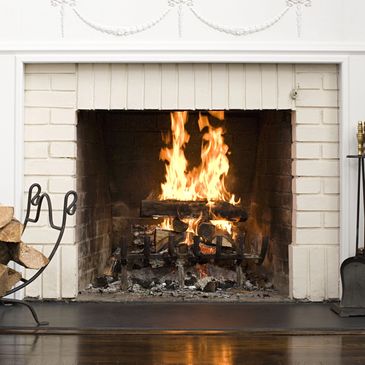
Open-Faced Fireplaces
Lined Fireplace Inserts
Lined Fireplace Inserts

Lined Fireplace Inserts
Lined Fireplace Inserts
Lined Fireplace Inserts
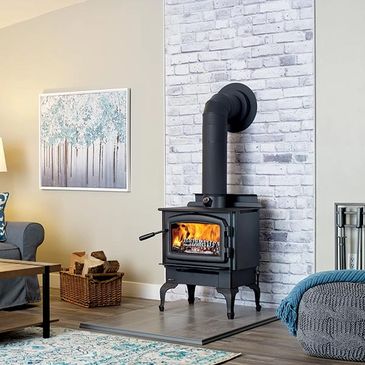
Free-Standing Stoves
Lined Fireplace Inserts
Free-Standing Stoves
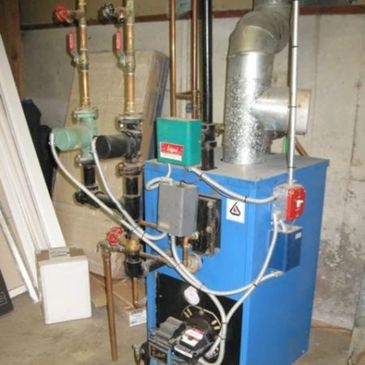
Home-Heating Systems
Lined Fireplace Inserts
Free-Standing Stoves
Client Prep For Chimney Service

Canvas tarps are used for protecting carpet and flooring, and obstructing furniture must be removed prior to arrival. A clear path from home entry to the work area must be made. Failure to accommodate may result in either the termination of your appointment (to which there is still a service charge), or your furniture and personal effects may become contaminated (soot exposure and staining). If opting to continue service, and if furniture and personal effects are contaminated, clients waive all rights to reclaim damages. Household pets must be compartmented from the work area and the point of entry to avoid sooty paw prints and escapes.
Fireplace Ash Pits
Ashpit clean-out services are not included with chimney sweeping, and are not offered as a stand-alone or add-on service. These cavities can reach volumes exceeding 400 cubic feet. Leftover ash on fireplace floors will be discarded down into ash pits during chimney sweeping service appointments to decrease company disposal costs. Not all fireplaces are constructed with ash pits, and ash removal from fireplace, wood stove, and wood insert floors will cause the price to increase for every 5-gal bucket removed. Licensed commercial companies are required by law to dispose of wood ash at costly HAZMAT-approved waste facilities or in HAZMAT EPA-certified dumpsters. The private homeowner can choose to bag wood ash for street-side trash pick-up, or to discard it on their property without concern or worry. Ash removal is homeowner-level maintenance, and fireplace, wood stove, and wood insert floors are expected to be cleaned off prior to my arrival for inspection and service appointments.
3 Types of Opened-Faced Fireplaces
Traditional Masonry Fireplace
Traditional Masonry Fireplace
Traditional Masonry Fireplace

Factory-Prefab Fireplace
Traditional Masonry Fireplace
Traditional Masonry Fireplace
Heat-Form Steel Box Fireplace
Traditional Masonry Fireplace
Heat-Form Steel Box Fireplace
Factory Pre-Fab Fireplaces

A pre-fab fireplace's refractory panels measure between three-quarters of an inch to one and one-quarter inch in thickness, depending on age and manufacturer. Over time and usage, they deteriorate, and require replacement. Although a wide window, panels can last for ten to twenty years. Over-fueling/firing and pouring water on a lit fire will expedite the urgency of replacement.

Heat-forms are constructed with four vents (C-shaped recirculating chambers, one on each side of the fireplace). These are meant to circulate warm air during use, and can sometimes have fans permanently installed from within. Most of these fans no longer operate. All four vents cannot be covered during use.
Occasionally, heat-forms are built without recirculating vents, or vents have been covered over by remodeling and masonry projects. These fireplaces will be labeled as unsuitable for continued use until necessary repairs are made, as building code requires these vents for safe operation.
Heat-form fireplaces are constructed from a mild steel material, and are double-walled. They tend to rust and warp over time, becoming unserviceable and unusable. Heat-forms haven't been installed in new home construction since the early 1980s, and some rare 3rd-gens into the late 1980s.
The majority of heat-forms rust from the outside in, due to age coupled with water/moisture intrusion. It is always recommended to remove a heat-form fireplace, and have the firebox and smoke chamber rebuilt with masonry. Given the age of homes built with heat-forms, chimney relining will mostly be required to maintain code compliance.
Textured, or "ribbed" rear walls indicate an early 1st-gen heat-form, installed from the 1940s to early 1960s. An integral heat exchanger is located above the fireplace opening, and obstructs access to the damper and smoke chamber. These cannot be serviced.
Instead of recirculation vents on the left and right sides, this 1st-gen heat-forms have heat exchanger "tubes" above the fireplace opening. This component will obstruct chimney brush passage and collection of soot and flammable material, which may accumulate behind the damper.
There are three generations of heat-forms. The 2nd-gen is most commonly occurring. In over 20 years, I have only seen two 3rd-gen heat-form fireplaces. While still having two vertical, C-shaped recirculation vents, their rear wall is ribbed again. Additionally, flue sizing has been increased to 12"x18" (1st and 2nd generations will have a 12"x12" flue size).
The 2nd and 3rd generations came with a pre-ordered modular smoke chamber, either centered or offset. While uncommon, there are heat-forms with an absence of a steel smoke chamber assembly. These will also be labeled as unsuitable for continued use, and a smoke chamber (or similar medium) is required for fireplace construction for code compliance.
Pictured: 1st Generation
Pictured: 1st Generation
Pictured: 1st Generation
Pictured: 1st Generation
Types of Wood Stoves & Wood Inserts
Masonry Fireplace Wood Insert
Masonry Free-Standing Wood Stove
Masonry Fireplace Wood Insert
Fully lined with a stainless steel sleeve, as per manufacture's instructions, and for building code compliance. "Unlined" inserts will not be serviced.
Masonry Alcove Wood Stove
Masonry Free-Standing Wood Stove
Masonry Fireplace Wood Insert
Vent pipe isn't removed, as it is connected to a stainless steel sleeve, similarly to fireplace inserts. "Unlined" stove applications will not be serviced.
Masonry Free-Standing Wood Stove
Masonry Free-Standing Wood Stove
Masonry Free-Standing Wood Stove
Stove's vent pipe is disconnected for cleaning, and to facilitate servicing for the chimney. If the thimble/chimney base area is shallow, servicing may sometimes be performed from indoors. Servicing is suspended Nov/Dec (pending weather) until the springtime, as roof access is required.
Free-Standing Class-A Wood Stove
Class-A Chimney Pipe With Removable Tee Cap
Masonry Free-Standing Wood Stove
Non-masonry chimney system, comprised of triple-walled stainless "class-A" piping, and the vent pipe isn't removed.
Servicing is suspended Nov/Dec (pending weather) until the springtime.
Class-A Chimney Pipe With Removable Tee Cap
Class-A Chimney Pipe With Removable Tee Cap
Class-A Chimney Pipe With Removable Tee Cap
Removeable tee cap at the bottom, allowing for year-round servicing, as chimney sweeping can be performed from the bottom up.
"Slammers"
Class-A Chimney Pipe With Removable Tee Cap
Class-A Chimney Pipe With Removable Tee Cap
"Unlined" fireplace inserts will not be serviced. Servicing will not be taken on if a client removes the appliance. Reinstallation without a liner is illegal. Homeowners insurance companies will drop policy holders with this type of application.
Stove Pipe "Reclaimers" & Clearances

Expect a significant mark-up because of how dirty these make your chimney. Conventional chimney sweeping may have little to no effect, and most likely descaling rotary sweeping will be required to remove creosote accumulation. Stove appliances with a reclaimer are only eligible for service during the off-season, spring through summer. An estimate will be remitted to remove the reclaimer, and replace with standard, steel stove pipe as they are no longer permitted under NFPA-211 standards and regulations.

Gas Fireplace Systems

Open-Faced Gas Logs
Chimney sweeping is seldom, if ever, required for open-faced fireplaces when the fuel type is only gas (NG or LP), as it burns extraordinarily clean when compared to solid-fuel applications (wood, coal, pellet).
Prior to a wood-to-gas conversion, the chimney is typically swept one last time, and future servicing and troubleshooting is performed by a licensed plumber for the new appliance.
MFC is not a licensed plumber, and cannot repair or perform diagnostics. However, for chimney evaluation and inspection services, pilot lights must be off for at least two hours prior to an appointment, and MFC will not reignite the appliance for a test-fire upon completion.
Sealed Gas Fireplace Inserts
Sealed gas inserts (with a glass service panel covering the fireplace opening) are ineligible for servicing and evaluation. Only a licensed plumber can remove the glass service panel. Again, MFC is not a licensed plumber.
UL testing and listing definitions are included in ICC/IRC building code, NFPA-211, and NJAC 5:23. All modern gas log sets and sealed gas inserts are UL-listed for specific fireplace types, and permits are required for installation. Unless there are clearance violations, gas log installation is permitted in all masonry fireplaces (homes built prior to 1996 will require new lining installation). Factory-prefab fireplaces' installation manuals will annotate whether your specific model is rated for solid-only, gas-only, or dual-fuel types. Heat-form fireplace systems predate UL testing standards, and gas conversions are never permitted.
Electric Fireplaces
These are not real fireplaces, they're bougie space heaters. They do not burn any type of fuel, and do not vent exhaust into a chimney. Most are stand-alone appliances stood up against a wall and plugged into an outlet, meaning there is no actual chimney anywhere close to it. There is no such thing as chimney sweeping for electric fireplaces, and service requests will go unanswered.
Additional Chimney Information

Service Intervals
Most fireplaces with a one square-foot flue area can burn through approximately one full cord of firewood before requiring service. For casual weekend use from Nov-Feb, one cord may last about 3 years. Most free-standing and inserted wood stoves can consume double before the chimney needs to be swept, due to higher efficiency.

Smoke Staining
This is the side effect of restricted flue dimensions from either negligence of maintenance (excessive build-up) or construction defects (undersized flue area). While it may not be visually apparent, smoke is "curling" outside the fireplace, and contacting the above surface.
Smoke Re-entry
Smoke Re-entry
The more severe outcome of restricted flue dimensions; loss of performance, down-draft, and smoke re-entry into the living space. This may also lead to odor issues, especially during the humid, summer months. Odor, however, isn't always indicative of a needing a sweep, and chimney sweeping doesn't always reduce or stop odor.
Home Heating Appliance Chimney Sweeping

Chimney sweeping is suspended throughout the winter months, pending frost and snow accumulation on rooftops.
Access indoors to the heating appliance(s) is required; a clear path to and from the heating system and where appliance vent pipes enter the chimney base/thimble are also necessary to facilitate service. Personal effects and other items, which block and obstruct the pathway to the heating system, must be removed prior to arrival. Snow must be cleared off of walkways and driveways.
Heating system "red switches" are turned off, and water tanks are set to pilot or vacation; if an appliance fails to re-fire or turn on, the home owner must contact an HVAC specialist, as this is indicative of an appliance malfunction.
NOTICE TO HOME OWNERS: Mt Freedom Chimney is not a licensed plumber or certified HVAC specialist. Boiler, burner, and furnace repair are not provided services; plumbing/mechanical installations and fuel conversions are also not provided. Pilot lights will not be relit.

After the heating appliance has been prepped, roof access is required for sweeping. Once swept, soot and other combustion byproducts are vacuumed and removed from the chimney base and thimble area before vent pipes are reconnected. Heating appliances are returned to their previous settings.
Violations in ICC IRC building code will be documented and disclosed. All invoices are remitted with line-by-line citations taken directly from the building code. Technicians may annotate the appliance(s) and chimney are "not suitable for continued use until necessary repairs are completed."
Insufficient work space: indoor access to the chimney breach and appliance(s) is required - no exceptions. Technicians will not remove and reorganize a customer's items and belongings. A cleared path to the heating appliance(s) with adequate room to work and to stage equipment must be arranged prior to arrival, otherwise a service charge will be issued, and the appointment canceled.
Certificates For Heating Appliances & Fuel Conversions

When:
1) converting a home-heating application from oil to gas,
2) replacing a furnace or a hot water tank,
3) installing a new heating appliance,
4) converting a wood fireplace to gas:
Licensed plumbers and HVAC/mechanical specialists are required to apply for permits for any fuel conversion and/or appliance replacement/installation (to include water tanks), and the municipality's building department will attach a "Chimney Verification Certificate" to the permit application.
If chimney relining is required, an additional permit for relining must be filed with your municipality's building department, as per N.J.A.C. 5:23-2.14; all permits require a municipal inspection to be closed.
Given the chimney is of masonry construction and the home was built prior to 1996, the chimney's interior flue lining will fail the inspection due to not meeting the criteria outlined in IRC Chapter 10 R1003.12. The chimney flue will require relining to satisfy all applicable plumbing, mechanical, and chimney building codes. Below is the excerpt from IRC Chapter 10 regarding flue lining construction.
Inspection and sweeping services do not automatically yield a passing certificate.

ICC IRC Chapter 10 R1003.12
For homes built prior to New Jersey's 1996 adoption of the IRC, invoices will cite R1003.12 being in violation, thus requiring the installation of a new chimney liner for current code compliance. Before 1996, jointing medium at every 2-foot flue tile interval was conventional sand-mortar cement mix. No longer permissible, the current required jointing medium is refractory mortar conforming to ASTM C199 standards, which is water insoluble, and able to expand and contract with rapid heating and rapid cooling.

ICC IRC Chapter 10 R1003.12
Even without habitual usage, conventional cement flue tile joints eventually turn sandy and gritty over the years, rupturing and falling out, causing gaps and spaces. This allows for exhaust and byproduct to circumvent the flue lining.

Adoption of...
N.J.A.C. 5:23 (1996)
New Jersey adopted the ICC's IRC as its, state-wide building code standard in 1996. Grandfathering is permitted for no greater than a 6 month period after the release of a new publication. The latest publication of "Chapter 10: Chimneys & Fireplaces" is January 2024. Code violations are cited/documented on invoices.
Dryer Vent Cleaning Services

Dryer vents are serviced from the exterior; a rotary brush is inserted from the outside while the dryer is turned on for one full cycle at the lowest temperature setting, and is spun the entire distance to the dryer's breach. For this reason, the dryer must be functional, and connected to its designated duct.
Dryer vent cleaning services can vary greatly in cost, correlating to the termination's location, the duct's overall length, as well as the time of year when service is requested. Price is subject to increase if deck boards must be removed, or if roof and/or attic access is required.
Please keep in mind that roof-borne services are not performed when there is snow or ice, and servicing may have to wait until more favorable weather.
Mt Freedom Chimney doesn't perform dryer appliance repair, and cannot order replacement parts. Dryer vents may require replacing duct components due to damage or faulty installation. Company policy does not permit the usage and installation of customer-supplied parts, materials, tools, and equipment.
HVAC heating/cooling air duct cleaning is not a provided service.
Dryer Vent Considerations
Ground Level Terminations
Ground Level Terminations
Ground Level Terminations
For most private homes, a dryer is usually installed on the 1st floor against an exterior wall, making for a relatively quick and inexpensive service. Duct length can be as short as one foot, and are allowed to be as long as thirty-five feet.
Ground Level Restrictions
Ground Level Terminations
Ground Level Terminations
Occasionally, ground level terminations can be in areas difficult to access, or may be partially obstructed. During the winter months with snow accumulation, servicing can be moderately annoying to a half-frozen technician, particularly difficult, or even downright impossible.
Second Floor Terminations
Ground Level Terminations
Second Floor Terminations
Aside from the 1st floor and basement, dryers may be installed on the 2nd floor. The termination could vent horizontally, whereas a ladder is required to gain access. In most townhouses, however, the duct is routed into the attic, and breaches the roofline.
Rooftop Terminations
Rooftop Terminations
Second Floor Terminations
Attic and roof access are most likely required for dryer vents that breach the roofline. Attic access alone isn't acceptable for thorough servicing most times. For these reasons, servicing from November through February is suspended, in favor of working during more forgiving weather, from March through October.
Townhouses & Condos
Rooftop Terminations
Townhouses & Condos
Dryer vent ducts are typically cleaned by default; visually assessing and inspecting require complete disassembly of the entire vent lateral, which could be hidden behind sheetrock walls, within ceilings, and venting through attics. Dryer vents are cleaned from their exterior termination using a rotary brush; the dryer appliance must be operational, and connected to its corresponding vent.
HOA Requirements
Rooftop Terminations
Townhouses & Condos
Supplementary to an invoice, separate fireplace and dryer vent inspection forms are remitted (only after posting payment) to satisfy HOA insurance requirements. Access indoors is required, and roof access is necessary when a dryer duct vents through the roof. Roof and ladder access is suspended from NOV-FEB due to weather, and residents must plan accordingly for scheduling an appointment.